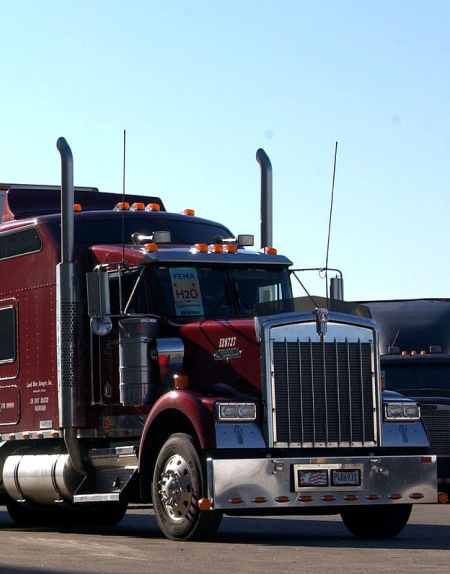





Road safety remains a critical focus within the trucking industry, which plays a vital role in the U.S. economy. The adoption of advanced technologies such as collision warning systems, driver monitoring tools, and advanced driver-assistance systems (ADAS) is reshaping safety management on the roads. This article explores how these innovations are being implemented to enhance transportation safety and minimize accidents.
Cutting-Edge Safety Technologies
1) Collision Warning Systems
Forward Collision Warning (FCW) and Automatic Emergency Braking (AEB)
- Operation: Employs cameras and sensors to identify potential frontal collisions.
- Response: FCW provides alerts to the driver, while AEB can autonomously engage the brakes when necessary.
- Advantages: Helps prevent rear-end crashes and improves driver response time.
2) Driver Monitoring Systems
Fatigue Detection Systems
- Operation: Tracks eye movements and head positioning to identify signs of drowsiness.
- Response: Notifies the driver to take a break.
- Advantages: Reduces fatigue-related incidents, a major contributor to accidents.
Distraction Monitoring Systems
- Operation: Detects activities such as phone use or eating while driving.
- Response: Issues alerts to redirect driver attention.
- Advantages: Decreases distraction-related accidents.
3) Advanced Driver-Assistance Systems (ADAS)
Lane Departure Warning Systems (LDWS)
- Operation: Utilizes cameras to monitor lane positioning.
- Response: Warns drivers when unintended lane departure occurs.
- Advantages: Reduces sideswipe accidents and unintentional road departures.
Blind Spot Detection
- Operation: Monitors surrounding lanes for other vehicles.
- Response: Alerts drivers when vehicles are detected in blind spots.
- Advantages: Minimizes collision risks during lane changes.
4) Telematics and Fleet Management Systems
Real-Time Tracking
- Operation: Continuously provides data on vehicle location and speed.
- Advantages: Improves fleet visibility and facilitates faster emergency response.
Predictive Maintenance
- Operation: Analyzes vehicle data to forecast mechanical issues.
- Advantages: Helps prevent unexpected breakdowns and reduces roadside failures.
Driver Performance Analytics
- Operation: Monitors driving behaviors for performance evaluation and coaching.
- Advantages: Enhances driver safety habits and fuel efficiency.
5) Challenges and Solutions
Financial Constraints
- Challenge: Significant initial investment required for technology deployment.
- Solution: Highlight long-term cost benefits through reduced accident rates and maintenance savings.
Driver Resistance
- Challenge: Concerns about privacy and job security.
- Solution: Provide comprehensive training and emphasize the safety benefits for drivers.
Technological Reliability
- Challenge: Dependence on technology that may malfunction or need updates.
- Solution: Implement routine maintenance and partner with dependable vendors.
Regulatory Compliance
- Challenge: Navigating complex federal and state regulations.
- Solution: Stay updated on legal requirements and collaborate with industry associations for guidance.
6) The Future of Transportation Safety
Artificial Intelligence (AI) and Machine Learning
- Potential: Enable more accurate risk predictions and personalized driver feedback.
Vehicle-to-Everything (V2X) Communication
- Potential: Enhance situational awareness through data exchange with nearby vehicles and infrastructure.
Autonomous Driving Technologies
- Potential: Gradual integration could drastically reduce accidents caused by human error.